
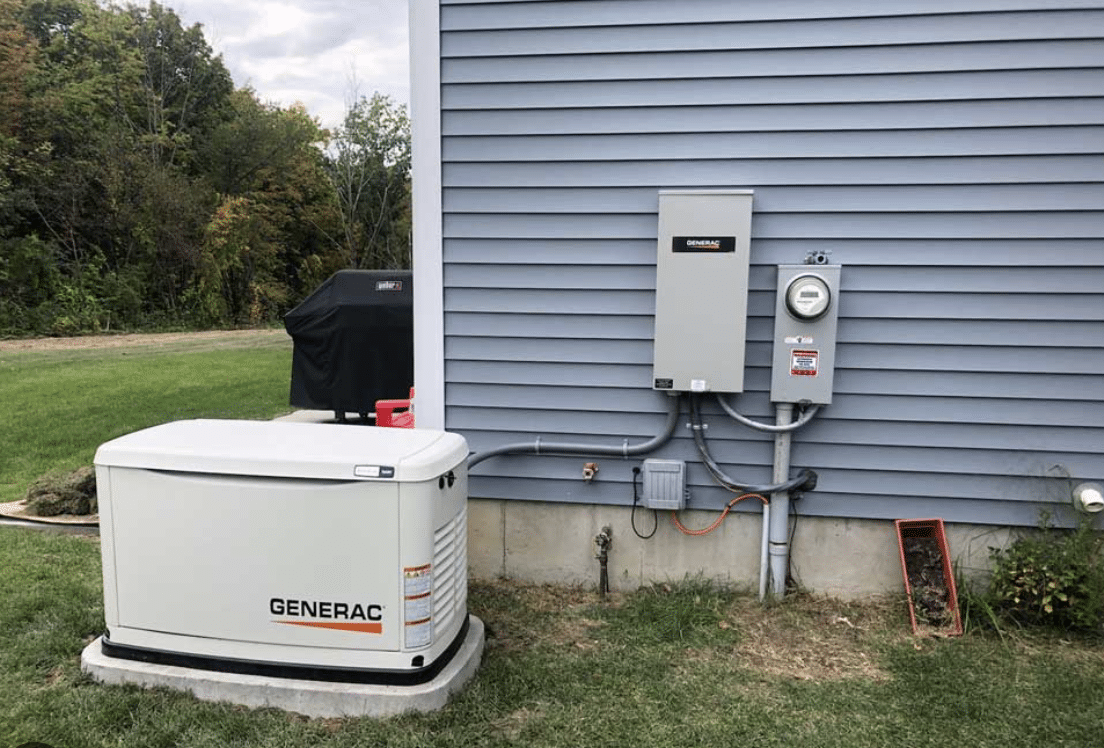
With severe weather always a possibility in areas like Tallahassee, Florida, whole-house standby generators are becoming incredibly common. These systems provide fantastic peace of mind, but they introduce a highly sensitive piece of equipment to the exterior walls: the automatic transfer switch (ATS).
Whether you are a homeowner wanting to understand how your property is protected, or a fellow exterior cleaning contractor looking to manage risk and liability on the job site, here is what everyone needs to know about safely prepping an ATS while soft washing a home.
The Inherent Risk: Water vs. The ATS
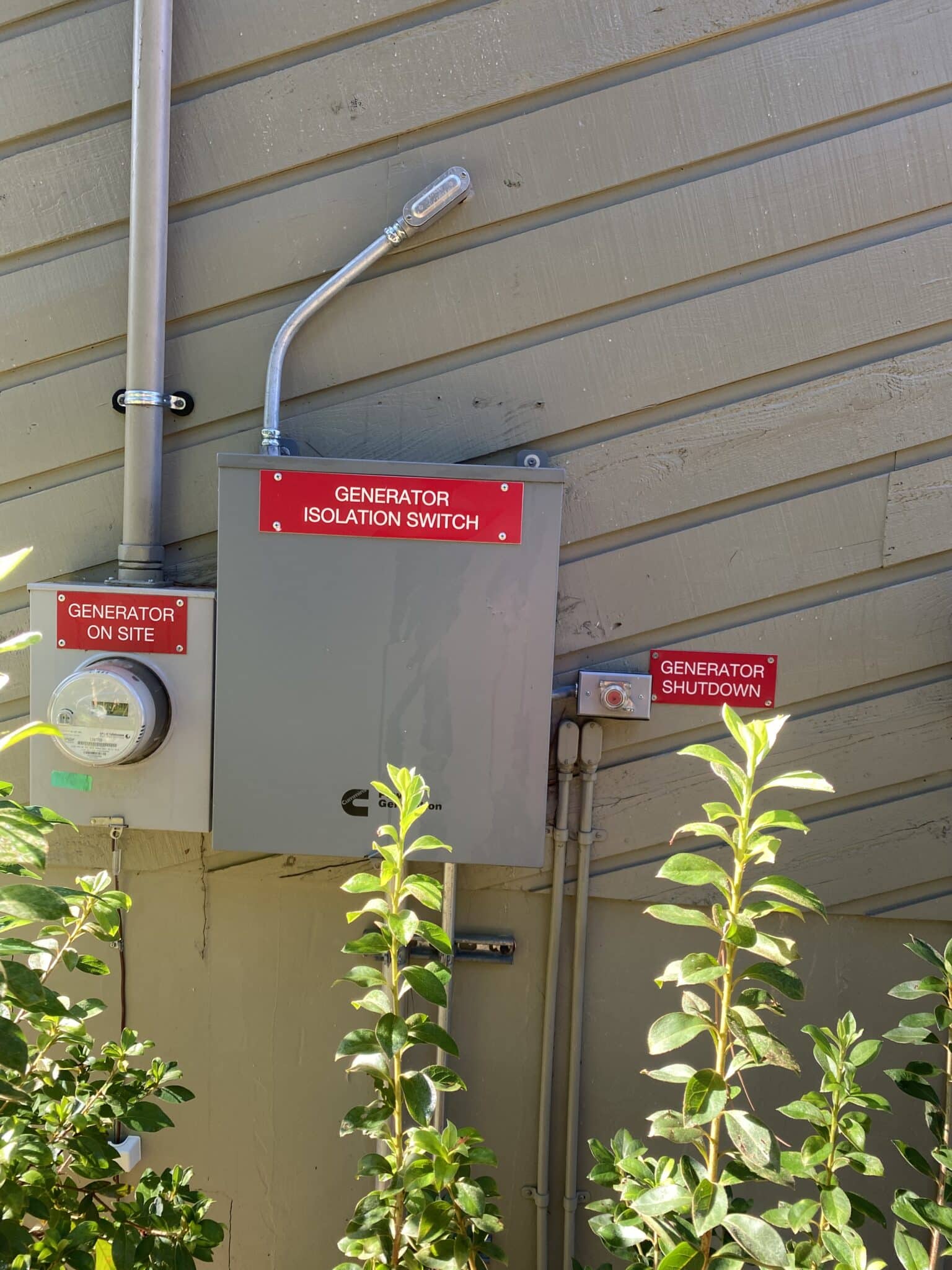
The automatic transfer switch is the heavy metal box sitting between the utility meter and the main breaker panel. It houses a 200-amp high-voltage mechanical switch and the delicate, low-voltage computer boards that control the generator.
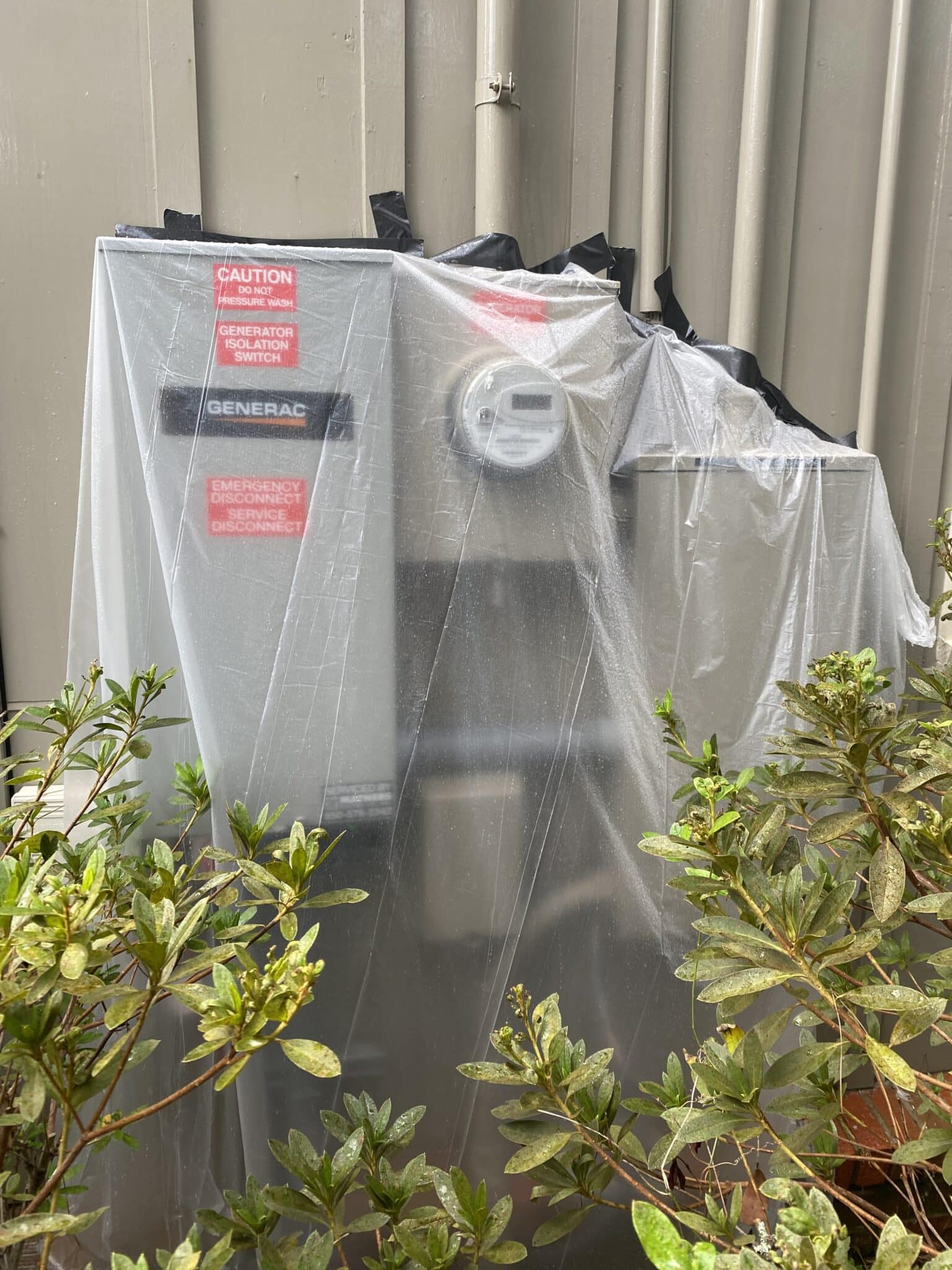
A standard practice to help mitigate water intrusion is to carefully wrap the entire unit in heavy-duty plastic and tape it off before any washing begins. Furthermore, even when the box is covered and taped, it is critical to avoid spraying it directly. The goal is to only lightly rinse the siding around the perimeter of the panel to minimize its overall water exposure.
However, water can be unpredictable and can sometimes find a way through the smallest manufacturer gaps, so it pays to be prepared for the unexpected.
A Real-World Case Study in Capillary Action
Even with rigorous preparation, outdoor electrical panels are generally not designed to be 100% airtight against all moisture. Recently, while soft washing a home, we had a transfer switch securely wrapped. We were lightly rinsing the area around the panel when suddenly, we heard a distinct “pop” from the box.
Instantly, the whole-house generator kicked on. This wasn’t a scheduled test; the generator stayed running under a full load, supplying power to the house. We immediately stopped work and had the homeowner contact a licensed electrician to safely inspect the system.
Despite the heavy plastic wrapping and our careful rinsing techniques, a few drops of water had managed to track down the siding, slip behind the galvanized backplate of the box, and use capillary action to pull itself upward through a tight back seam inherent to the box’s design.
Diagnosing the “Pop”: The SACM Board
When the electrician opened the panel, we learned exactly what had happened—and why we weren’t looking at a massive, full-box replacement.
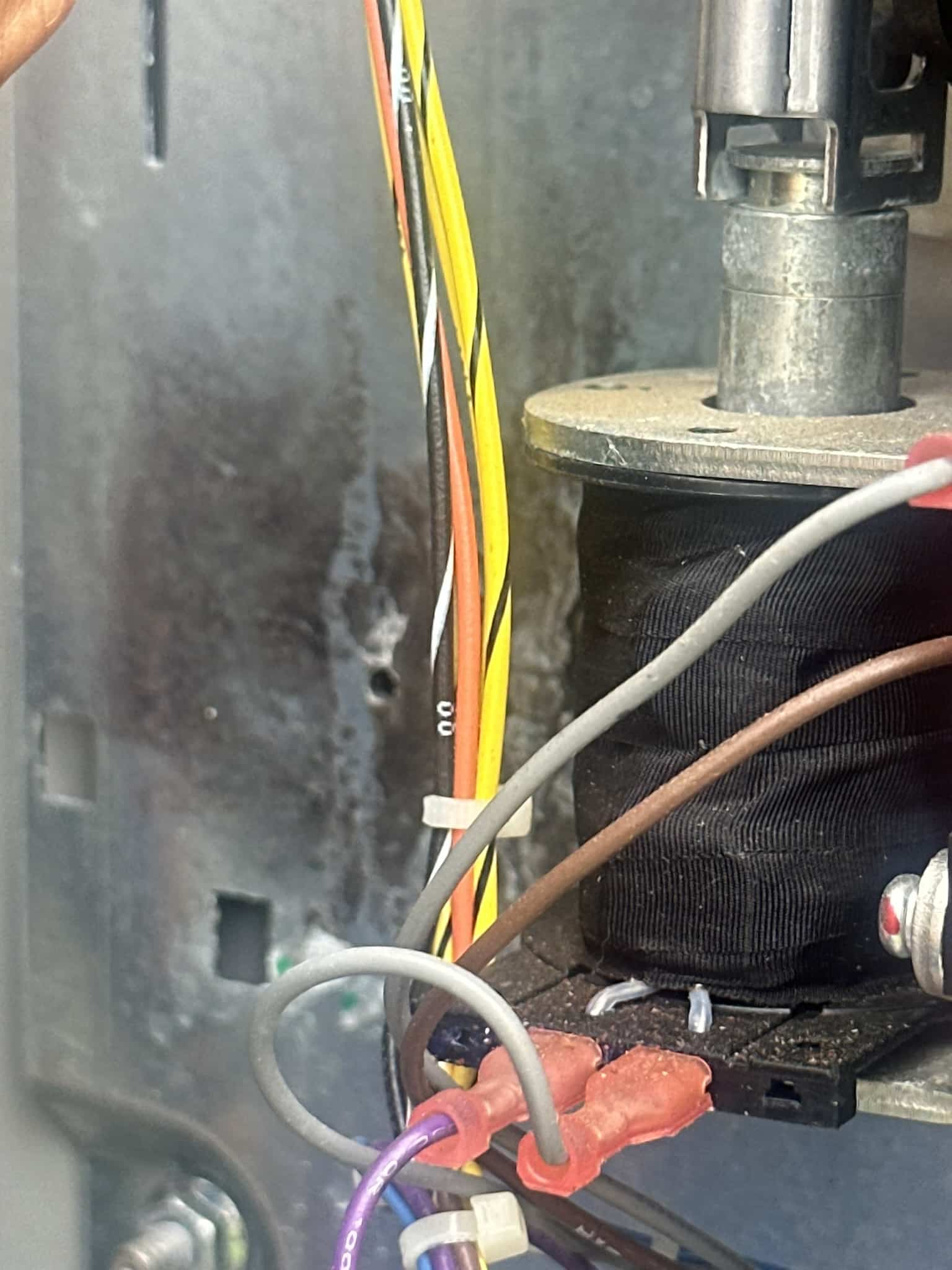
The high-voltage side of the ATS was completely dry. Instead, those few hidden drops made their way onto the SACM (Smart A/C Module). This is a small, low-voltage circuit board located near the bottom of the enclosure that acts as the communication “brain” for the generator.
When moisture touched that specific board, it shorted a component (the “pop”) and temporarily broke the 12-volt sensing circuit. The generator immediately assumed the city power grid had failed and went into emergency mode.
For anyone dealing with a water intrusion issue, this is generally a manageable scenario. The fix was straightforward and affordable. The electrician swapped in a new SACM module, plugged the wiring harness back in, and the system returned to normal operation.
Upgrading Standard Operating Procedures: The “Dual-Layer” Prep
At Hot Water Pressure Washing, we believe in constantly evolving our field techniques to help manage our business’s liability and care for our clients’ property. Following this incident, the electrician noted that while our wrapping technique was thorough, adding an extra step could help further minimize the risk of capillary action along the backplate.
Using that field experience, we have implemented an enhanced “Dual-Layer” prep procedure for all whole-house generator switches moving forward to add further risk mitigation.
Our Updated Prep Procedure:
-
Direct Seam Taping: Before applying our standard plastic wrap, we take waterproof tape and directly tape over the back seams, side openings, and back-plate gaps right on the metal panel itself. This provides an initial layer of defense against capillary water tracking.
-
Plastic & Outer Tape: Once the box’s seams are taped, we wrap the entire unit in heavy-duty plastic and secure it with a second layer of tape.
-
Indirect Rinsing: We maintain our strict standard practice of never hitting the wrapped box with direct pressure, only lightly rinsing the siding around it.
No exterior electrical box can ever be deemed perfectly waterproof, and risk can never be 100% eliminated. However, by sharing these field lessons and adapting our prep techniques, homeowners can rest easy knowing their property is in good hands, and fellow contractors can navigate these situations to better manage their liability while soft washing a home.