
Artillery Fungus: Tiny Black Dots On Siding
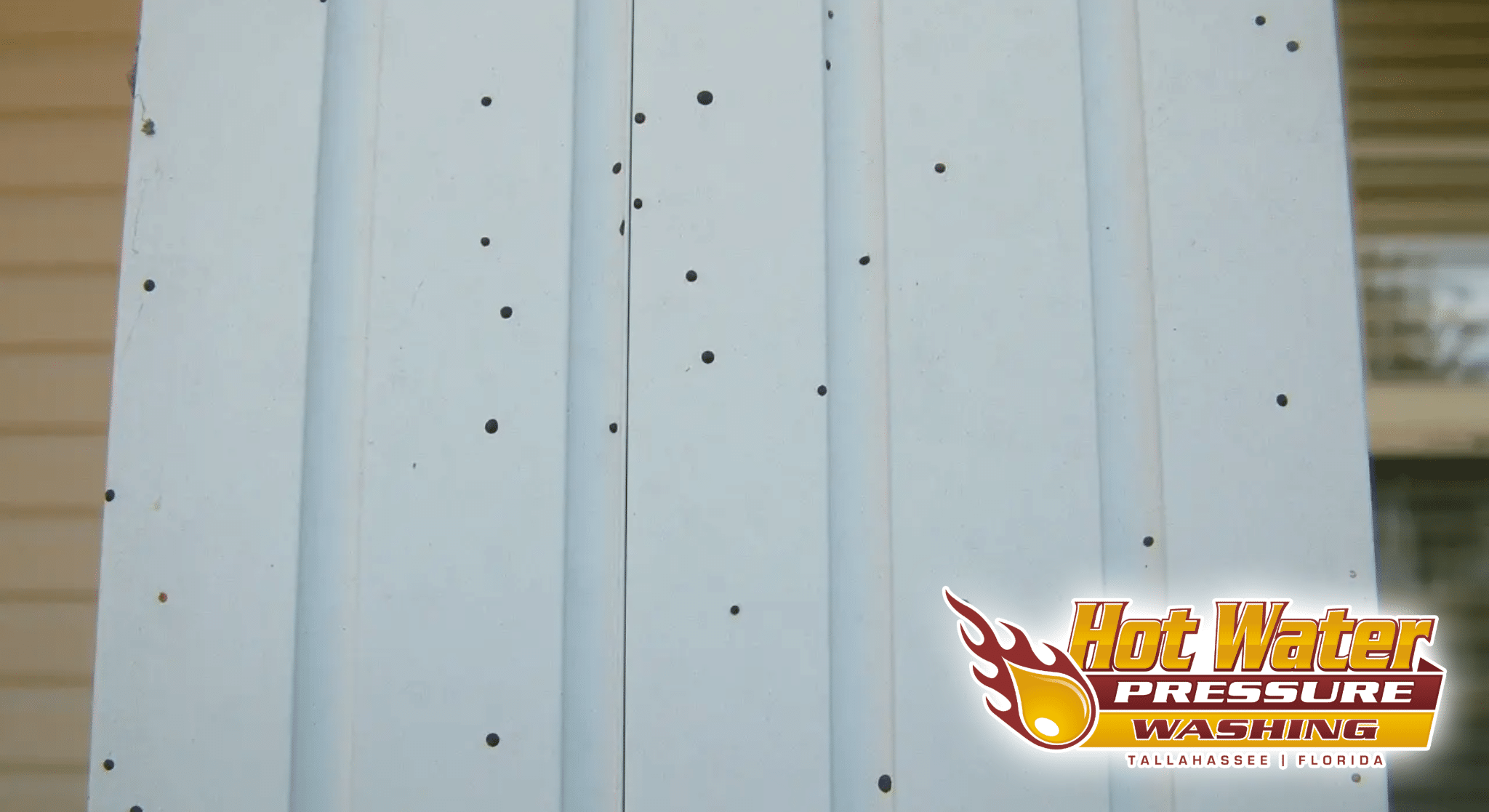
Have you ever noticed tiny, black, tar-like specks on your home’s siding? You might try scrubbing them or blasting them with a hose. But they refuse to budge.
If this sounds familiar, you likely have artillery fungus. This fungus creates a stubborn and frustrating problem for homeowners in Tallahassee, Florida.
This guide explains this pesky fungus. We will show you why it is so hard to remove. We will also share the best way to protect your property.
What Exactly is Artillery Fungus?
Artillery fungus is a wood-decaying fungus. It thrives in decomposing organic matter. Many people also call it “shotgun fungus.”
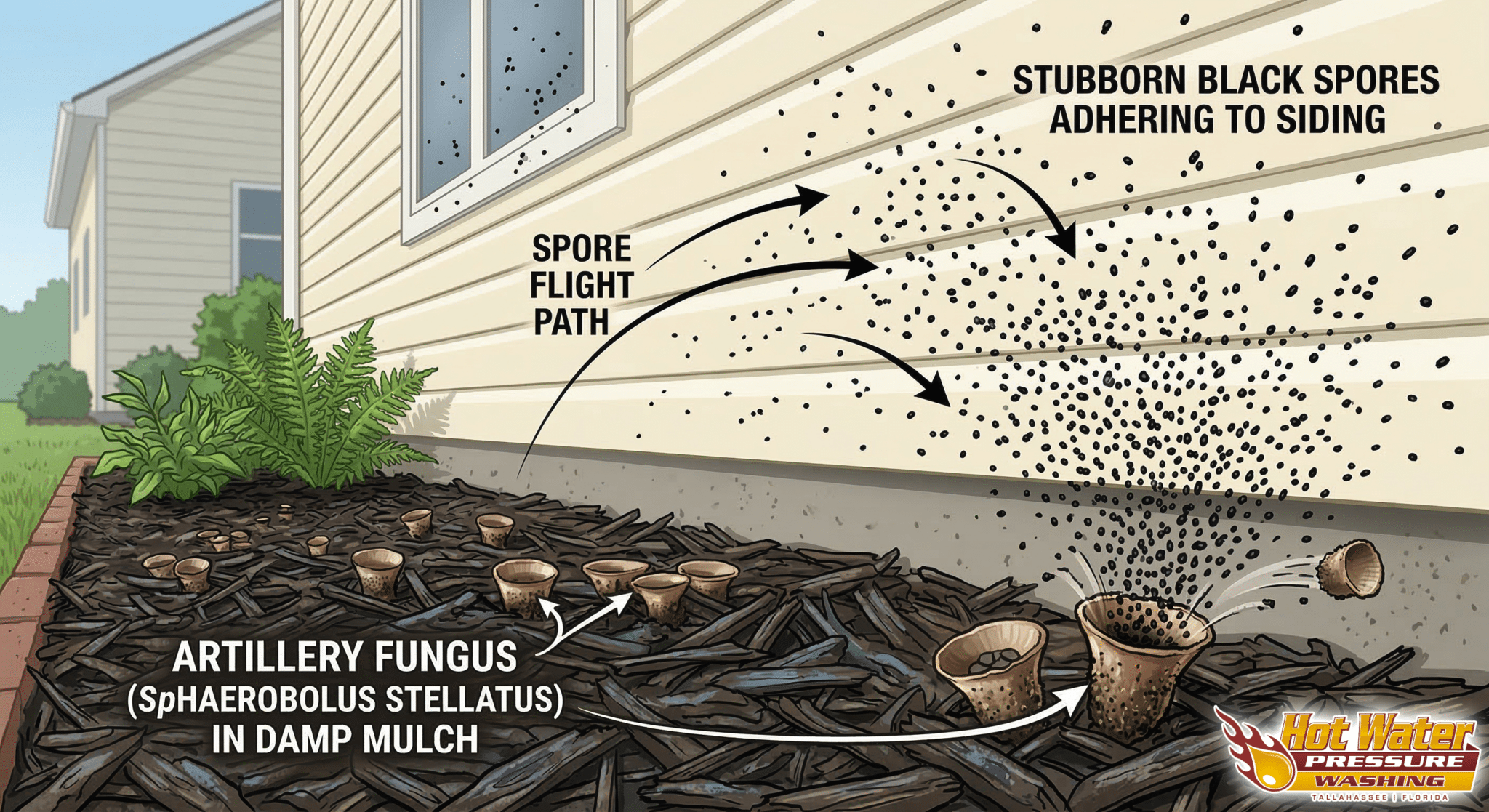
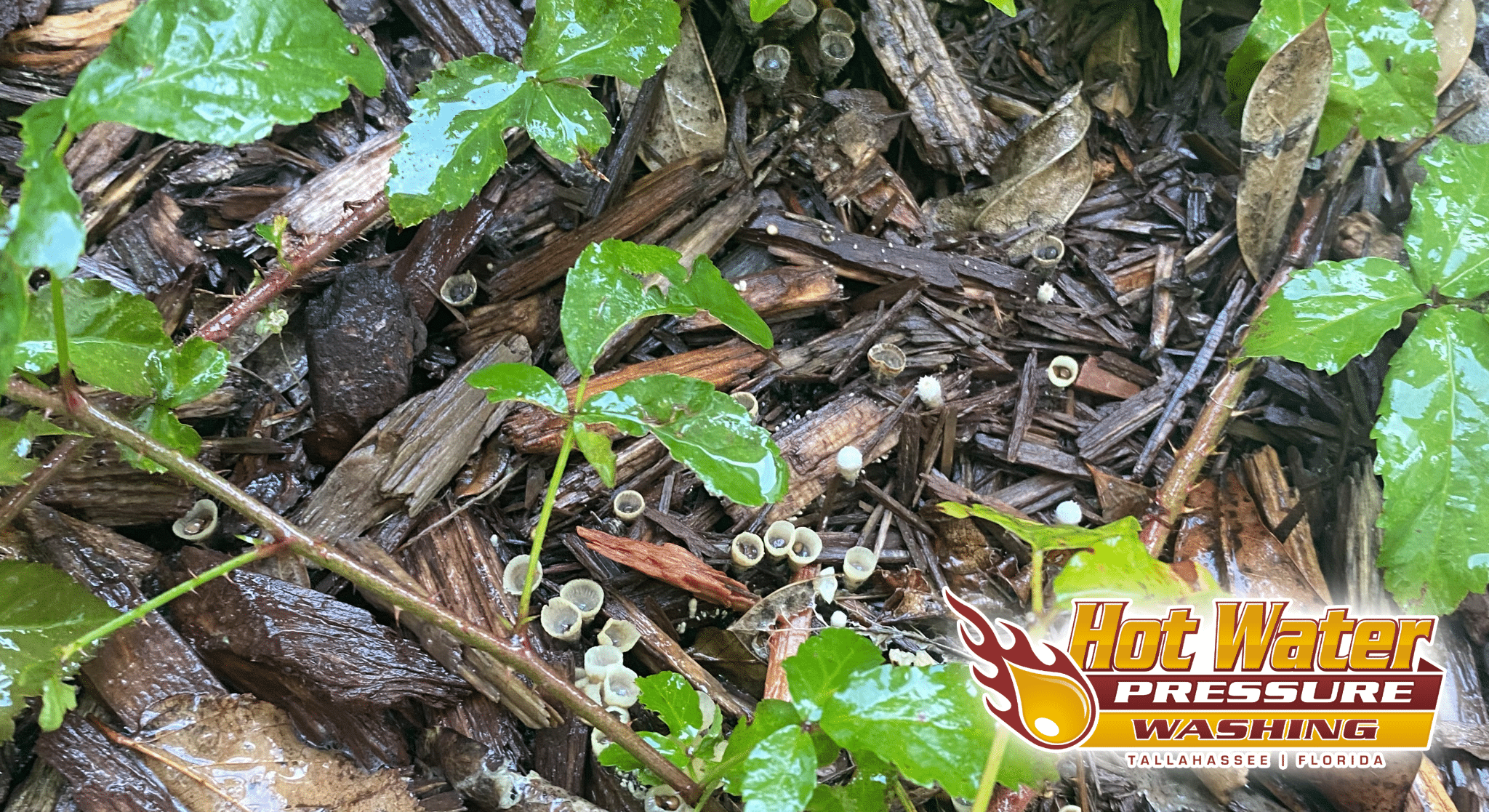
The name “artillery” fits perfectly. The fungus grows small, cup-like structures in damp, decaying matter. These cups collect water. Around houses, you will usually find this fungus in flower beds. It loves old mulch near your home’s siding and porches.
As pressure builds, these cups burst open. They launch sticky spore masses into the air. These spores are those tiny black dots. The fungus lives in the mulch. However, the real damage happens when those tar-like dots stick to your home. They hit siding, windows, and nearby surfaces. These spores love light. Therefore, they almost always aim for your home’s bright exterior.
I have professionally cleaned homes throughout Tallahassee, Florida. Over the years, I have seen artillery fungus damage on many properties. I see it on brand-new construction and well-established homes alike. Old wood mulch is the most common culprit. It usually rests right against the affected areas.
Sometimes I see this fungus grow without mulch. However, that is pretty rare. In those cases, old, dying tree stumps usually cause the problem. Damp piles of rotting leaves or yard debris can also fuel the growth.
Why Won’t These Black Specks Wash Off?
Our humid climate breeds organic growth like algae and mildew. Thankfully, we can easily fix that green, fuzzy buildup. Annual Soft Wash House Washing safely removes algae and restores your home’s beauty.
However, artillery fungus is a different beast. Those black specks act like super-strong glue.
-
Washing is Ineffective: Standard pressure washing will not remove these hardened spores. Even professional Soft Wash House Washing has little to no effect.
-
Scraping Causes Damage: You must remove them using a tedious, hands-on approach. You have to scrape off each spore one by one. This process easily scratches your siding. It chips the paint and leaves permanent stains.
After this tedious removal process, you often must repaint the affected area anyway.
The #1 Prevention Strategy: Ditch Your Wood Mulch
Removing these tiny black dots is incredibly difficult. It also risks permanent damage to your home’s exterior. Therefore, prevention is your only true solution. You must rethink what you put in your flowerbeds.
You need an effective and cost-efficient way to protect your home. Getting rid of wood mulch near your foundation is the best method.
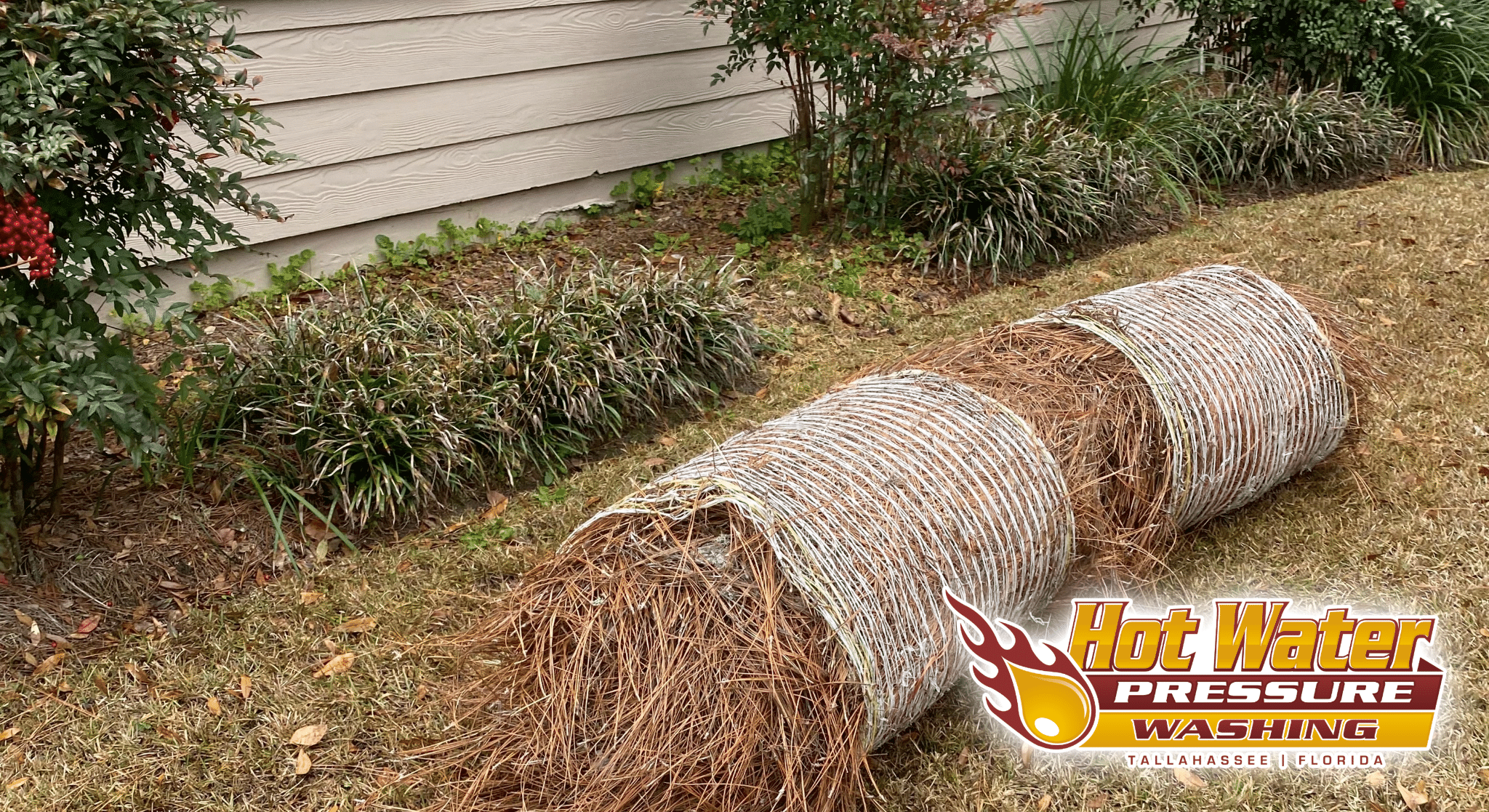
In my professional opinion, pine straw is the best alternative. No landscaping material is completely immune to organic growth. However, artillery fungus rarely thrives in pine straw. The fungus needs decaying, chunky wood material to survive. You can drastically reduce the threat by making this simple switch.
Pine straw also offers several other amazing advantages:
-
Excellent Weed Suppression: A thick layer of pine straw chokes out unwanted weeds.
-
Superior Moisture Retention: It helps soil retain water. This keeps your plant roots healthy during dry spells.
-
Natural & Sustainable: Pine straw provides a classic Southern look. It is also a highly renewable resource.
-
Improves Soil Health: Pine straw slowly decomposes and enriches your soil. This promotes healthy plant growth.
What to Do If You Already Have Black Spots
You might already see artillery fungus spores on your siding. Do not panic, but act fast. You must stop thousands more from hitting your home.
-
Remove the Source Immediately: Carefully rake up all infected wood mulch. Remove leaves and yard debris from around your home’s foundation.
-
Dispose of It Properly: Bag the debris and put it in the trash. Do not compost it! The resilient spores easily survive the composting process. They will create a brand-new infestation wherever you spread the compost.
-
Make the Switch: Replace the old mulch with clean pine straw.
-
Assess the Remaining Damage: Look closely at your siding after cleaning it. Do you still see tiny black artillery fungus spores? If so, you might need to repaint or replace the affected areas. You can try scraping them off first. But remember, scraping easily scratches and gouges the surface. Scraping poses a high risk of damage. Because of this, replacing or repainting the material is often the only true solution.
Your home is your biggest investment. Don’t let a simple landscaping choice cause permanent damage. Choose pine straw this season. Protect your property’s beauty and value for years to come.